TLI Spatial Light Modulators
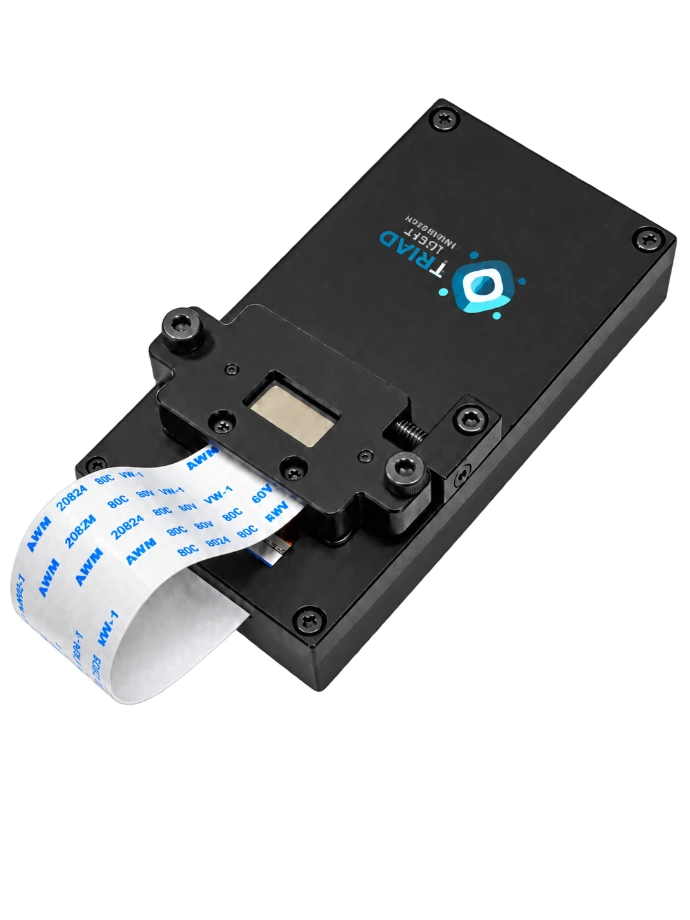
Programmable Phase Control for Flexible Optical Systems
TLI offers two phase-only SLM configurations, providing different pixel pitches, wavelength coverage, and response speeds for research, development, and optical system integration.
TLI Spatial Light Modulators
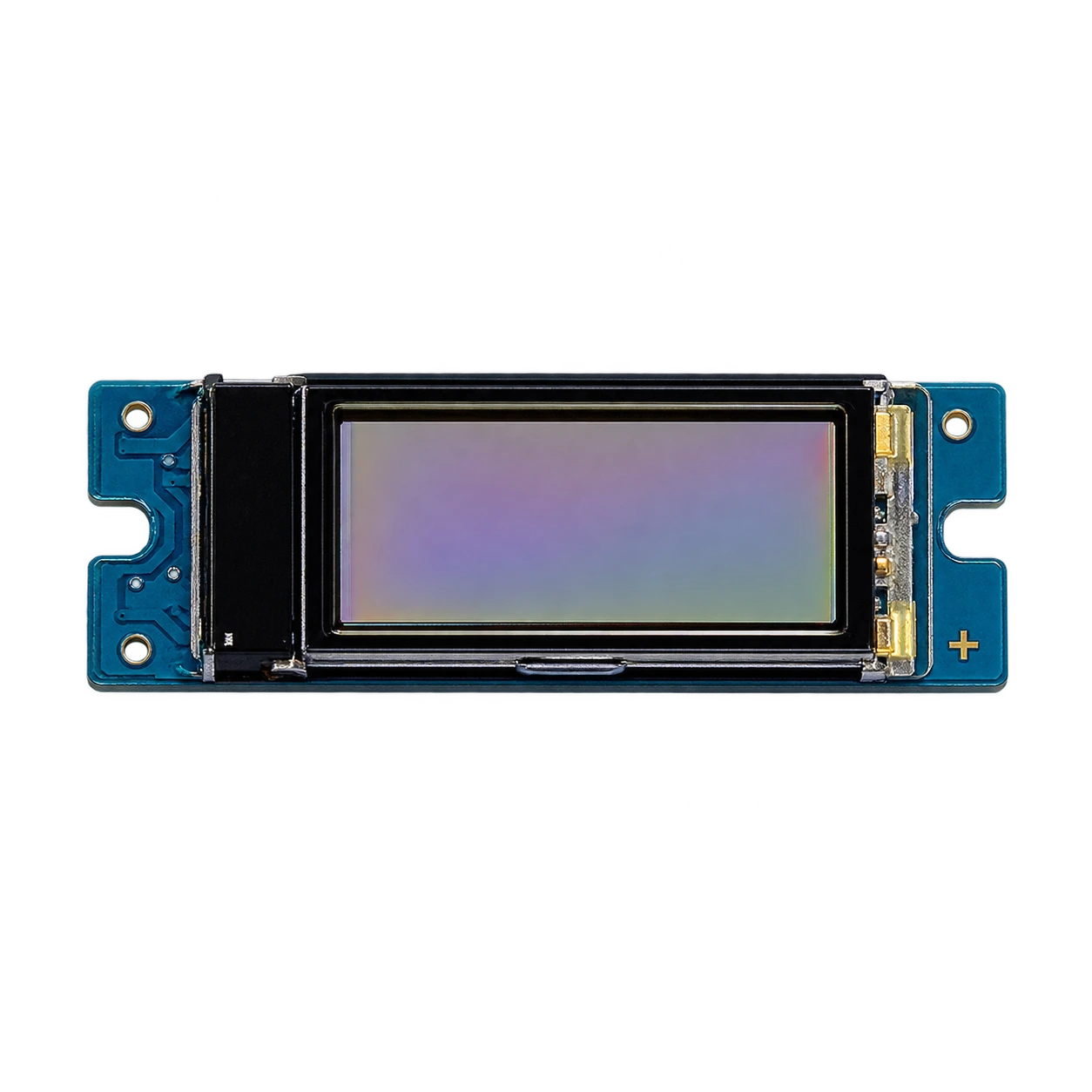
TLI-SLM-8.0
Broadband Phase-Only SLM
The TLI-SLM-8.0 is our broadband and fast-response SLM platform, combining an 8 μm pixel pitch with 10 ms response time.
With wavelength coverage extending from the visible to the near-infrared, it is well suited for programmable wavefront control, multi-wavelength optical development, and applications requiring operation up to 1550 nm.
Resolution: 2K × 1K Pixels
Pixel Pitch: 8 μm
Key Properties
- 0–2π phase modulation
- 8-bit phase control
- 10 ms response time
- Broadband VIS–NIR operation
- Supported wavelength bands: 450–750 nm and 950–1550 nm
- Recommended incident angle: < 8°
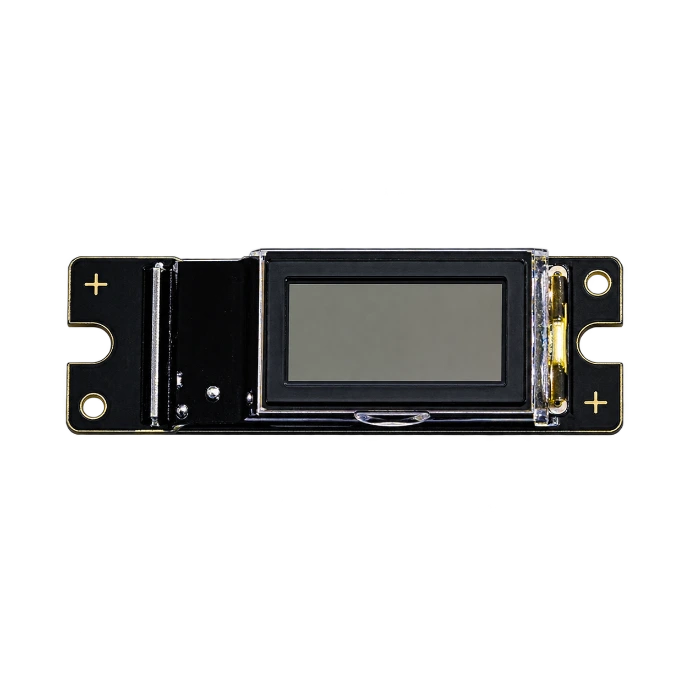
TLI-SLM-6.4
Fine-Pixel Phase-Only SLM
The TLI-SLM-6.3 features a smaller 6.3 μm pixel pitch for fine spatial control of optical wavefronts.
Designed for visible and near-infrared applications, it provides programmable phase modulation for holography, microscopy, beam manipulation, optical computing, quantum optics, and other research applications requiring precise spatial modulation.
Resolution: 2K × 1K Pixels
Pixel Pitch: 6.4 μm
Key Properties
- 0–2π phase modulation
- 8-bit phase control
- 30 ms response time
- Small pixel pitch
- Supported wavelength bands: 450–750 nm and 950–1000 nm
- Recommended incident angle: < 8°
Product Comparison
*Wavelength Note: The wavelength range from 750 to 950 nm is not supported.
Programmable Wavefront Control
In a conventional optical system, many optical functions are determined by fixed components and their physical arrangement. Changing the optical function may require replacing components, adjusting the optical path, or mechanically realigning the system.
An SLM introduces a programmable element into this architecture.
By changing the phase pattern displayed on the SLM, the optical wavefront can be modified digitally while the physical optical configuration remains unchanged. This provides a flexible platform for developing, testing, and implementing different optical functions.
Reconfigurable Optical Functions
Different phase patterns can be loaded to perform different optical functions using the same device, enabling rapid switching between beam shaping, focusing, steering, holography, and wavefront correction.
Faster Optical Development
Optical parameters can be adjusted digitally, allowing researchers and engineers to evaluate different wavefront configurations without repeatedly replacing fixed optical elements.
Adaptive Wavefront Control
Programmable phase modulation can be used to compensate for aberrations and system variations, enabling adaptive and iterative optimization of optical performance.
Software-Defined Optics
Optical functionality can be linked with algorithms, automation, and computational methods, making the optical system more adaptable to new experiments, operating conditions, and applications.
Spatial Light Modulator Applications
Holography
- Computer-Generated Holography (CGH)
- Digital Holography
- Holographic Imaging and Display
- Diffractive Optical Functions
Beam Shaping & Wavefront Control
- Beam Shaping
- Beam Steering
- Wavefront Correction
- Adaptive Optics
- Optical Vortex and Higher-Order Mode Generation
- Bessel and Airy Beam Generation
Microscopy & Imaging
- Advanced Microscopy
- Structured Illumination
- Wavefront Correction for Imaging
- Computational Imaging
- Image Processing
Quantum Optics
- Quantum Optics Research
- Quantum Information Experiments
- Single-Photon Wavefront Manipulation
- Spatial Mode Generation and Analysis
- Structured Light for Quantum Optical Systems
Optical Computing
- Optical Computing
- Diffractive Computing
- Optical Neural Networks
- Computational Optics
- Programmable Optical Processing
Optical Trapping
- Optical Trapping
- Optical Tweezers
- Multi-Spot Beam Generation
- Dynamic Particle Manipulation
Interferometry & Measurement
- Interferometry
- Wavefront Measurement
- Optical Testing
- Phase Control and Compensation
Laser & Optical System Development
- Laser Beam Manipulation
- Programmable Focusing
- Experimental Optical Systems
- Research and Prototype Development
- Programmable Optical System Integration
From Fixed Optics to Programmable Optics
Need Help Selecting an SLM?
Tell us your wavelength, laser source, beam size, optical configuration, and intended application. Our team can help identify the appropriate SLM configuration and support its integration into your optical system.
Specification | TLI-SLM-8.0 | TLI-SLM-6.4 |
Modulation | Phase Only | Phase Only |
Resolution | 2K × 1K Pixels | 2K × 1K Pixels |
Pixel Pitch | 8 μm | 6.4 μm |
Phase Modulation Range | 0–2π | 0–2π |
Bit Depth | 8-bit | 8-bit |
Supported Wavelength Bands | 450–750 nm / 950–1550 nm | 450–750 nm / 950–1550 nm |
Response Time | 10 ms | 30 ms |
Recommended Incident Angle | < 8° | < 8° |
Key Characteristic | Broadband / Fast Response | Small Pixel Pitch |